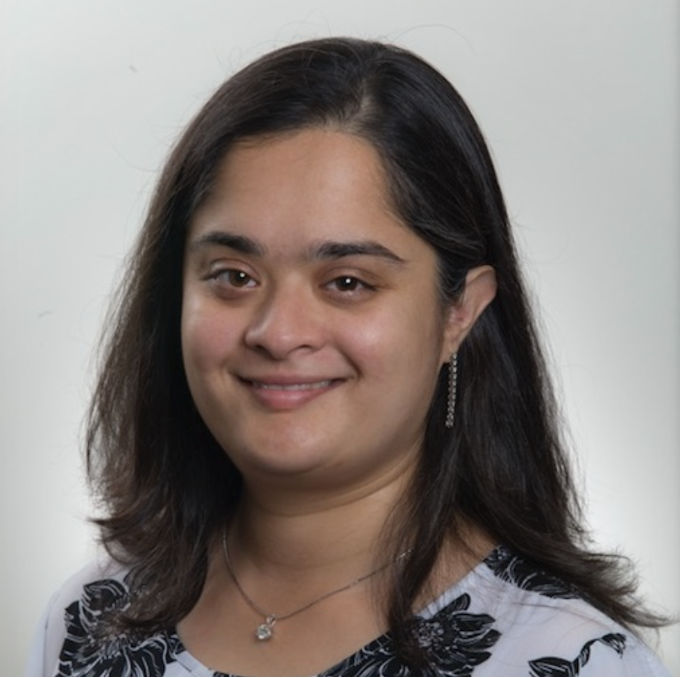
Devi Parikh is a Research Director in the Generative AI organization at Meta, and an Associate Professor in the School of Interactive Computing at Georgia Tech. From 2013 to 2016, she was an Assistant Professor in the Bradley Department of Electrical and Computer Engineering at Virginia Tech. From 2009 to 2012, she was a Research Assistant Professor at Toyota Technological Institute at Chicago (TTIC), an academic computer science institute affiliated with University of Chicago. She has held visiting positions at Cornell University, University of Texas at Austin, Microsoft Research, MIT, Carnegie Mellon University, and Facebook AI Research. She received her M.S. and Ph.D. degrees from the Electrical and Computer Engineering department at Carnegie Mellon University in 2007 and 2009 respectively. She received her B.S. in Electrical and Computer Engineering from Rowan University in 2005. Her research interests are in computer vision, natural language processing, embodied AI, human-AI collaboration, and AI for creativity. She is a recipient of an NSF CAREER award, an IJCAI Computers and Thought award, a Sloan Research Fellowship, an Office of Naval Research (ONR) Young Investigator Program (YIP) award, an Army Research Office (ARO) Young Investigator Program (YIP) award, a Sigma Xi Young Faculty Award at Georgia Tech, an Allen Distinguished Investigator Award in Artificial Intelligence from the Paul G. Allen Family Foundation, four Google Faculty Research Awards, an Amazon Academic Research Award, a Lockheed Martin Inspirational Young Faculty Award at Georgia Tech, an Outstanding New Assistant Professor award from the College of Engineering at Virginia Tech, a Rowan University Medal of Excellence for Alumni Achievement, Rowan University’s 40 under 40 recognition, a Forbes’ list of 20 “Incredible Women Advancing A.I. Research” recognition, and a Marr Best Paper Prize awarded at the International Conference on Computer Vision (ICCV).
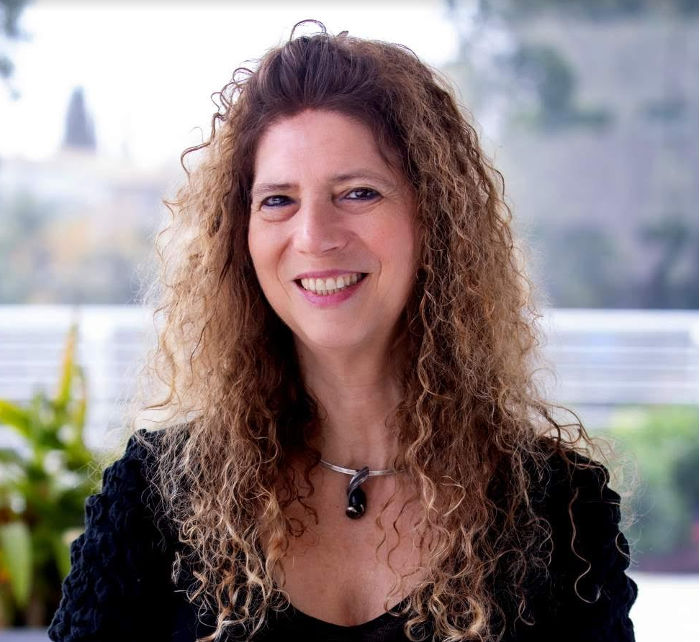
Michal Irani is a Professor at the Weizmann Institute of Science, Israel. She joined the Weizmann Institute in 1997, where she is currently the Dean of the Faculty of Mathematics and Computer-Science. Michal's research interests center around Computer-Vision, Image-Processing, Artificial-Intelligence, and Video information analysis. She also works on decoding visual information from Brain activity. Michal received a B.Sc. degree in Mathematics and Computer Science from the Hebrew University of Jerusalem, and M.Sc. and Ph.D. degrees in Computer Science from the same institution. During 1993-1996 she was a member of the Vision Technologies Laboratory at the Sarnoff Research Center (Princeton).
Michal's prizes and honors include the David Sarnoff Research Center Technical Achievement Award (1994), the Yigal Alon three-year Fellowship for Outstanding Young Scientists (1998), the Morris L. Levinson Prize in Mathematics (2003), the Maria Petrou Prize (awarded by the IAPR) for outstanding contributions to the fields of Computer Vision and Pattern Recognition (2016), the Landau Prize in Artificial Intelligence (2019), and the Rothschild Prize in Mathematics and Computer Science (2020). She received the ECCV Best Paper Award in 2000 and in 2002, and was awarded the Honorable Mention for the Marr Prize in 2001 and in 2005. In 2017 Michal received the Helmholtz Prize – the “Test of Time Award” (for the paper “Actions as space-time shapes”).
In 2023 Michal was elected member of the [Israel Academy of Sciences and Humanities](http://www.academy.ac.il/).

Aaron Hertzmann is a Principal Scientist at Adobe, and Affiliate Faculty at University of Washington. He received a BA in computer science and art/art history from Rice University in 1996, and a PhD in computer science from New York University in 2001. He was a Professor at University of Toronto for 10 years, and has also worked at Pixar Animation Studios and Microsoft Research. He has published over 100 papers in computer graphics, computer vision, machine learning, robotics, human-computer interaction, and art. He is an ACM Fellow and an IEEE Fellow.

A pioneer of software-based fine art, Jason Salavon works at the intersection of art, culture, and technology. Using self-authored code, he creates visually arresting artworks from culturally-loaded material: U.S. Census data, the IKEA catalog, episodes of The Simpsons, Wikipedia pages, the history of Western painting. Salavon's work embraces a tension between autonomous computational processes and more traditional creative forms. His work presaged, and engages with, the explosive rise of digital art in AI and on the blockchain. Born in Indiana, raised in Texas, and based in Chicago, Salavon earned his MFA at The School of the Art Institute of Chicago and his BA from The University of Texas at Austin. His work has been exhibited in museums and galleries around the world and been featured in publications such as The New York Times, Artforum, Art in America, and WIRED. Examples of his artwork are included in prominent public and private collections including the Museum of Modern Art, Metropolitan Museum of Art, the Whitney Museum of Art, and the Art Institute of Chicago among many others. He is currently associate professor in the Department of Visual Arts at the University of Chicago.